Swollen Legs After Flying: How to Drain Fluid Naturally
Quick answer: To drain fluid from swollen legs after flying, use a ceramic body gua sha tool with gentle upward strokes, stay hydrated, and move every hour. This stimulates lymphatic flow and reduces puffiness.
In this article
Key takeaways
- Lymphatic drainage reduces post-flight leg puffiness by encouraging fluid movement.
- Using a ceramic gua sha tool with upward strokes is the most effective technique.
- Hydration and light movement before, during, and after your flight make a big difference.
- Consistency matters: a 5-minute routine after each flight prevents fluid from settling.
- Avoid tight clothing and salty snacks to minimize swelling in the first place.
Why Your Legs Swell After Flying
When you sit for hours in a pressurized cabin, gravity and inactivity cause fluid to pool in your lower body. This is called dependent edema, and it’s why your ankles and calves feel tight and heavy. Your lymphatic system, which normally drains waste and fluid, slows down without movement.
Understanding this process is the first step to relief. By gently encouraging lymph flow, you can reduce that uncomfortable puffiness. Swollen legs after flying how to drain fluid becomes a simple, repeatable practice once you know the ‘why’ behind it.
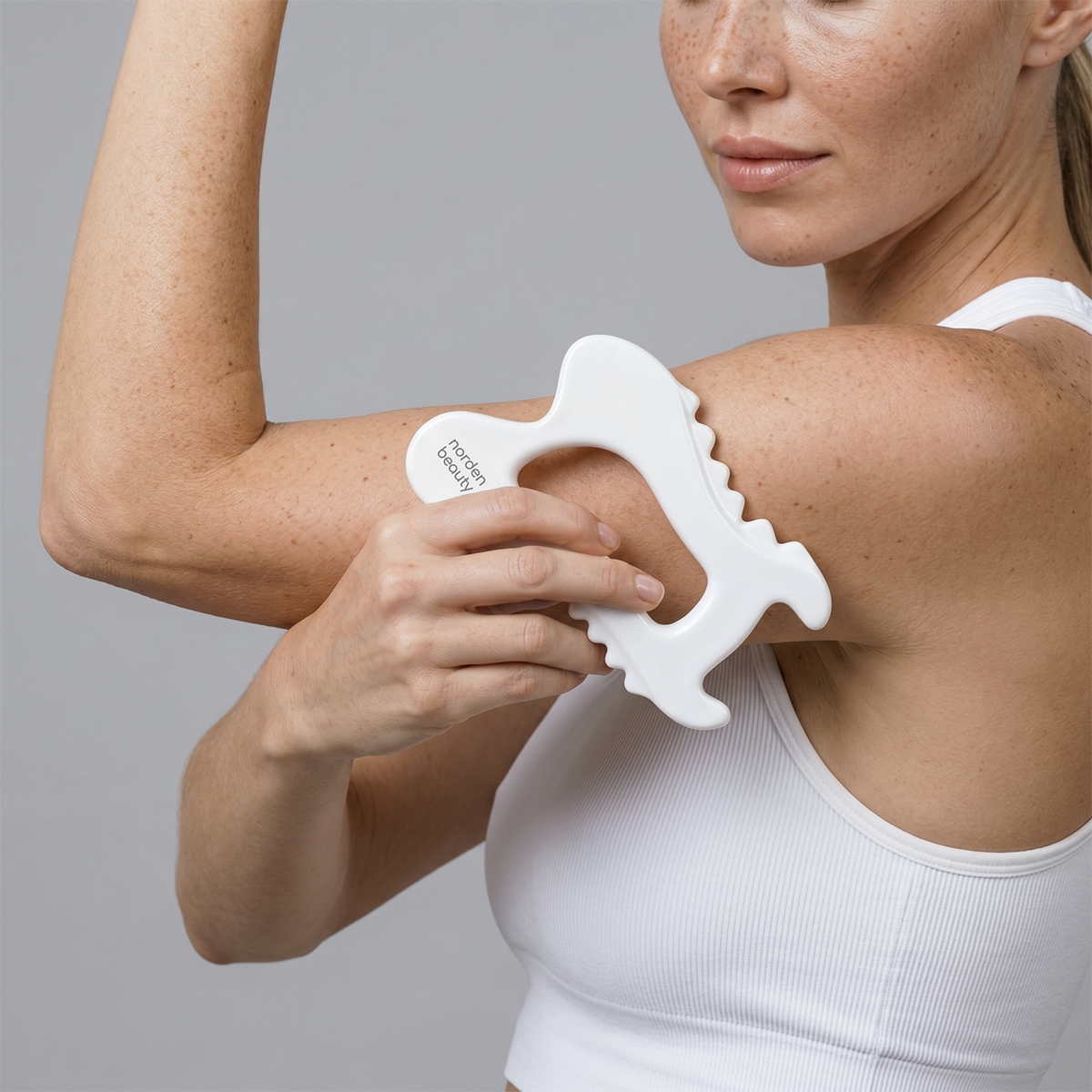
Think of your lymphatic system as a gentle river. When you’re sedentary, the river slows. A little movement and manual stimulation get it flowing again. That’s exactly what our ceramic gua sha tool does — it’s like a gentle nudge for your body’s natural drainage system.
Our Ceramic Body Gua Sha for Lymphatic Drainage is crafted from high-quality ceramic with an ergonomic shape that fits your hand perfectly. It gently stimulates lymph flow, reduces puffiness, and leaves your legs feeling refreshed after every flight.
Common Mistakes When Trying to Drain Fluid
Many women make the mistake of pressing too hard or using downward strokes. This can actually push fluid further into your tissues, making swelling worse. Another common error is skipping hydration — paradoxically, drinking more water helps your body flush out excess fluid.
Some people also rely on compression garments alone. While helpful, they don’t actively move fluid. You need a technique that stimulates circulation and encourages lymph to flow toward your lymph nodes. That’s where a gentle gua sha routine shines.
Finally, don’t expect instant results after one session. Your body needs time to rebalance. Pair your gua sha work with light walking and elevation for the best outcome. Avoid sitting cross-legged, which can kink lymphatic pathways.
Featured Product
Ceramic Body Gua Sha for Lymphatic Drainage
Our Ceramic Body Gua Sha for Lymphatic Drainage is crafted from high-quality ceramic with an ergonomic shape that fits your hand perfectly. It gently stimulates lymph flow, reduces puffiness, and leaves your legs feeling refreshed after every flight.
Tips for Best Results with Lymphatic Drainage
Start your routine within a few hours of landing, while fluid is still mobile. Apply a light oil or lotion to your legs so the gua sha tool glides smoothly. Use gentle, upward strokes from your ankles toward your thighs, always moving in the direction of your lymph nodes.
Focus on your inner thighs and behind your knees — these are key areas where fluid tends to stagnate. Spend about 2-3 minutes per leg, repeating each stroke 5-10 times. You don’t need to press hard; the tool’s weight does the work.
For an extra boost, wear our Anti-Cellulite Leggings after your session. They provide gentle compression that supports continued lymphatic flow. You can also use our Infrared Sauna Blanket 2.0 | PREMIUM to promote overall circulation and relaxation, which complements the drainage process beautifully.
Consistency is your secret weapon. Make this a post-flight ritual, and you’ll notice less swelling over time. Your body learns to respond faster when you train it with regular care.
How to Use a Gua Sha Tool for Lymphatic Drainage
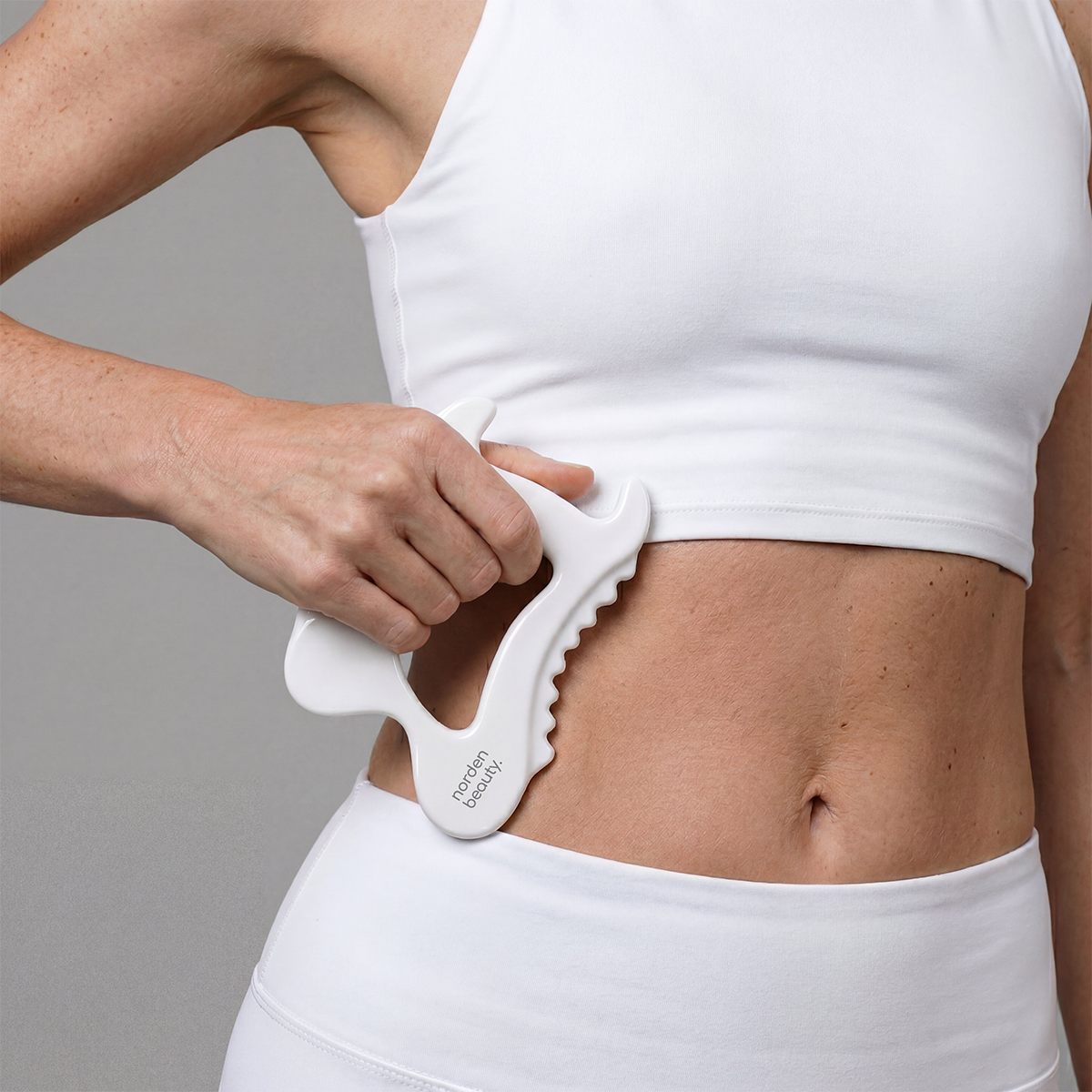
Your ceramic body gua sha is designed to mimic the gentle pressure of a professional lymphatic massage. Start with clean, oiled skin. Hold the tool at a 15-30 degree angle and use long, sweeping strokes from your ankle up toward your inner thigh. Never go backward — always move toward your heart.
Focus on the front and sides of your shins, then your calves, and finally your thighs. Spend extra time on areas that feel particularly puffy. You can also gently work the tops of your feet, where fluid often collects first.
For a deeper release, pause at your groin area (where major lymph nodes live) and make small circular motions. This helps ‘open the door’ for fluid to drain. Remember: less is more. You’re not trying to bruise or break up tissue — you’re guiding fluid home.
If you want to learn more about the science behind manual lymphatic drainage, this external resource offers a great overview of how gentle touch supports your body’s natural detox pathways.
Step-by-Step: How to Use Ceramic Body Gua Sha for Lymphatic Drainage
Step 1: Prepare Your Skin and Tool
Apply a thin layer of body oil or lotion to your legs. This helps the ceramic gua sha glide smoothly without tugging. Clean your tool with warm soapy water beforehand.
Step 2: Start at Your Ankles
Hold the gua sha at a 15-30 degree angle. Begin at your ankle bone and sweep upward along the front of your shin. Repeat 5-10 times before moving higher.
Step 3: Work Your Calves
Move to your calf muscle. Use long, slow strokes from your Achilles tendon up toward the back of your knee. This area holds a lot of fluid, so be patient and gentle.
Step 4: Address Your Thighs
Sweep from just above your knee up to your hip crease. Focus on the inner thigh, where lymph nodes are concentrated. Use slightly firmer pressure here, but never painful.
Step 5: Finish with Gentle Circles
At your groin area, make small clockwise circles with the flat edge of the tool. This helps ‘activate’ the lymph nodes and encourages fluid to move out of your legs.
Step 6: Hydrate and Elevate
Drink a glass of water immediately after your routine. Lie down for 10 minutes with your legs elevated on pillows. This combination helps your body flush the mobilized fluid.
Myths vs Facts
Myth
Swollen legs after flying are just water weight and will go away on their own.
Fact
While some fluid reabsorbs naturally, active drainage techniques speed up the process significantly and prevent discomfort from lingering for days.
Myth
You need to press hard to move fluid.
Fact
Lymphatic vessels are just below the skin’s surface. Gentle, consistent pressure is far more effective than deep, forceful strokes, which can cause bruising and push fluid the wrong way.
Myth
Only professional massages can help with post-flight swelling.
Fact
A ceramic body gua sha tool lets you perform effective lymphatic drainage at home. With the right technique, you can achieve similar results to a professional session.
Myth
Drinking less water will reduce swelling.
Fact
Dehydration actually makes your body hold onto fluid. Drinking plenty of water helps flush excess sodium and supports your lymphatic system in doing its job.
Frequently Asked Questions
How long does it take to reduce swelling in legs after flying?
Can I use a gua sha tool on my legs every day?
What is the best way to drain fluid from swollen legs after flying?
Should I use the gua sha tool before or after my flight?
Can I combine gua sha with compression leggings?
Post-flight puffiness doesn’t have to ruin your first day back. With a few minutes of gentle gua sha work, you can help your body release trapped fluid and feel like yourself again. The key is consistency and a light touch — your lymphatic system responds best to kindness, not force.
Remember, every body is different. Some flights may cause more swelling than others, depending on your hydration, salt intake, and how much you moved. Be patient with yourself. Over time, this simple ritual becomes second nature, and you’ll wonder how you ever traveled without it.