0
    Your cart - 0 items
    Your cart is empty

        Suggested searches InfraredMaskOilPro

        CLOSE
        Buy now, pay later
        Worldwide shipping
        2-year warranty
        50 000+ satisfied customers

        Cellulite vs Lipedema: The Touch Test & How to Tell the Difference

        For many women, the struggle with lower-body weight feels like an uphill battle. You diet, you exercise, and yet the legs remain heavy, tender, and textured. This often leads to a confusing question: is it regular cellulite or lipedema?

        While they can look similar at a glance, the two are very different. Lipedema is a chronic medical condition involving abnormal, often painful fat accumulation. Cellulite is a cosmetic structural issue affecting an estimated 80–90% of women. Knowing which one you’re dealing with matters — because the treatment paths look almost nothing alike.

        Feature Cellulite Lipedema
        Pain level Painless Tender, sometimes painful to the touch
        Symmetry Random, can be one-sided Always symmetrical (both legs equally)
        Affected areas Thighs, hips, buttocks Legs and sometimes arms; spares feet & hands
        Texture under skin Doughy, dimpled “orange peel” Nodular, “beans in a bag”
        Bruising Normal Easy and unexplained bruising
        Response to diet/exercise Improves modestly Largely resistant
        Typical onset Any age, often gradual Linked to puberty, pregnancy, menopause

        Key Takeaways

        • Pain Factor: Lipedema is often painful to the touch; cellulite is not.
        • Symmetry: Lipedema affects both legs equally; cellulite can be random.
        • Diet Resistance: Lipedema fat is notoriously resistant to calorie restriction.
        • Hormonal Triggers: Lipedema almost always begins or worsens around hormonal life stages.
        • Diagnosis Matters: Only a qualified clinician can confirm a lipedema diagnosis.
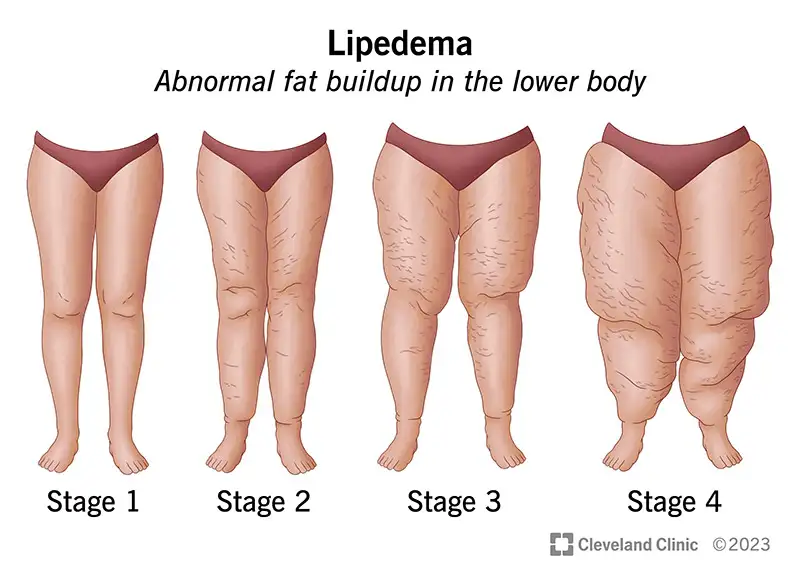
        Cellulite or lipedema comparison illustration showing progressive lipedema stages versus normal legs

        Cellulite or Lipedema: The Visual Guide

        When trying to distinguish between cellulite or lipedema, look at the feet first. In lipedema, fat typically stops abruptly at the ankles — creating a “cuff” or “inverse boot” effect — while the feet themselves remain unaffected. Cellulite is simply dimpled skin that can appear anywhere fat is stored, usually thighs, hips, or buttocks.

        Lipedema legs are often described as “column-like” and feel disproportionately heavy. The skin may feel cool and soft, but the tissue underneath feels nodular — like small marbles or beans rolling under the surface. Regular cellulite tissue feels more like standard, doughy fat with surface dimpling.

        The “Touch Test”: Symptoms to Watch

        The biggest differentiator is sensation. If your legs hurt when a pet jumps onto your lap, when you bump into a coffee table, or even when someone hugs you too tightly — and the pain feels disproportionate to the impact — this is a hallmark of lipedema. Easy, unexplained bruising is another clear signal. Cellulite, by contrast, is rarely painful.

        While there is currently no cure for lipedema, supporting lymphatic flow and reducing tissue inflammation can meaningfully improve daily comfort. Gentle infrared heat — for example, the Infrared Sauna Blanket — may help calm pain signals and encourage stagnant lymph fluid to move, without the pressure of a deep manual massage.

        Woman using an infrared sauna blanket to help with lipedema pain and inflammation reduction

        Understanding the Stages and Grades

        The 4 Stages of Lipedema

        Lipedema is generally classified by how advanced the tissue changes are. Progression is not inevitable — early management can slow or prevent it.

        • Stage 1: Skin surface is smooth. The fat layer is enlarged and small nodules can be felt under the skin. Often dismissed as “just curvy.”
        • Stage 2: Skin surface develops indentations and a wavy texture. Larger nodules become palpable. Tenderness usually becomes more noticeable.
        • Stage 3: Significant overgrowth of fat tissue creates large folds, particularly around the thighs and knees. Mobility may be affected.
        • Stage 4: Lipedema combined with lymphedema (lipo-lymphedema). Lymphatic flow is severely impaired and visible swelling becomes persistent.

        Most women diagnosed are still in Stage 1 or Stage 2 — and consistent management makes a real difference at these stages.

        The 3 Grades of Cellulite

        Cellulite is typically scored on the Nürnberger-Müller scale:

        • Grade 1 (mild): No visible dimpling when standing or lying down — only when the skin is pinched.
        • Grade 2 (moderate): Dimpling visible when standing, smooths out when lying down.
        • Grade 3 (severe): Dimpling visible in both positions, often with a “mattress” texture.

        Most women fall into Grade 1 or Grade 2, both of which respond well to consistent body care.

        Causes and Risk Factors

        Why Lipedema Develops

        Lipedema is still poorly understood, but research consistently points to a combination of factors:

        • Genetics: Lipedema often runs in families. A significant share of patients report a relative with similar symptoms.
        • Hormones: Onset and flare-ups are tightly linked to estrogen shifts — puberty, pregnancy, perimenopause, and menopause are common trigger points.
        • Female sex: Lipedema almost exclusively affects women. Men with the condition typically have an unrelated hormonal disorder.
        • Inflammation and lymphatic dysfunction: Affected fat tissue shows signs of chronic low-grade inflammation and impaired lymphatic drainage.

        Importantly, lipedema is not caused by overeating, lack of willpower, or a “bad diet.” Lifestyle factors influence comfort — but they do not cause the underlying condition.

        Why Cellulite Forms

        Cellulite is a normal feature of how female fat is structured beneath the skin:

        • Connective tissue: Women’s collagen bands run vertically, creating a quilted appearance when fat pushes through.
        • Hormones: Estrogen influences fat distribution and connective tissue elasticity.
        • Genetics: Skin thickness and fat distribution are largely inherited.
        • Lifestyle: Hydration, circulation, and muscle tone affect visibility.

        Cellulite is common, normal, and not a medical concern — it affects most women regardless of body size.

        Myths vs. Facts

        Myth: “You just need to lose more weight.”
        Fact: Lipedema fat is metabolically distinct. You can lose weight in your upper body while your legs remain the same size. It is not your fault.

        Myth: “All massage makes lipedema worse.”
        Fact: Aggressive massage can hurt, but gentle, professionally guided lymphatic drainage is a core part of lipedema care. The key word is gentle: because lipedema tissue bruises easily, any pressure or suction should stay light and be cleared with your therapist or doctor first.

        Myth: “It’s all in your head.”
        Fact: Lipedema involves measurable tissue changes — nodular fat, lymphatic dysfunction, and chronic inflammation. It is recognized in the WHO ICD-11 classification.

        Myth: “Liposuction is dangerous for lipedema.”
        Fact: Standard cosmetic liposuction is not the same as lipedema-specific liposuction. Trained specialists use techniques (water-jet assisted, tumescent) that protect lymphatic vessels and target diseased fat.

        Signs You Might Have Lipedema

        • Disproportion: You wear a significantly smaller size on top than on bottom.
        • Texture: Tissue under the skin feels like small peas or marbles (nodules).
        • Bruising: You find unexplained bruises on your legs.
        • Heaviness: Legs feel heavier as the day goes on.
        • Family pattern: A mother, sister, or aunt has similar leg shape.

        Professional Treatment Options

        If self-assessment points toward lipedema — or if your symptoms significantly affect daily life — professional treatment is the right next step.

        Medical Approaches for Lipedema

        • Manual Lymphatic Drainage (MLD): A specialized, gentle massage technique performed by certified therapists. It helps move lymph fluid out of affected tissue.
        • Medical-grade compression: Custom flat-knit garments support tissue and reduce swelling. Often prescribed for daily wear.
        • Lipedema-specific liposuction: Water-jet assisted (WAL) or tumescent liposuction performed by surgeons trained specifically in lipedema is the standard surgical option when conservative measures aren’t enough.
        • Anti-inflammatory protocols: Many specialists recommend a low-inflammation eating pattern, such as Mediterranean-style or modified ketogenic, alongside other treatments.

        Clinical Treatments for Cellulite

        • Radiofrequency therapy: Uses heat to stimulate collagen and tighten skin.
        • Acoustic wave therapy: Targeted sound waves help break down fibrous bands.
        • Subcision (Cellfina, Avéli): Minimally invasive procedure that releases tethered connective bands.
        • Topical retinoids: Prescription or cosmetic retinol may improve skin texture over months.

        Results vary significantly between individuals. No clinical treatment offers permanent removal of cellulite.

        Reducing the Appearance of Cellulite at Home

        Because cellulite is cosmetic rather than medical, it responds well to consistent at-home care between (or instead of) clinic visits. Alongside dry brushing, exfoliation and regular movement, an at-home vacuum device can help smooth the look of dimpled skin on the thighs, hips and arms.

        The ShapePro 4.0 Vacuum & EMS Body Sculpting Device pairs vacuum massage with EMS to lift the skin, boost circulation and tone the muscle underneath, which can visibly reduce the appearance of cellulite with regular use. Start on a low setting, keep the device gliding rather than held in one spot, and use a body oil for smooth movement. If you have lipedema or fragile, easily-bruised skin, check with your doctor before using any suction device.

        Nordenbeauty ShapePro 4.0 vacuum massager smoothing the appearance of cellulite on the thigh

        For smoother-looking skin on cellulite-prone areas, a gentle vacuum and EMS routine is an easy at-home addition to dry brushing and movement.

        Discover ShapePro 4.0

        When to See a Doctor

        Self-care can support daily comfort, but a professional diagnosis matters if you notice:

        • Disproportion between your upper and lower body that doesn’t change with weight loss
        • Pain or tenderness in your legs that worsens with pressure
        • Easy or unexplained bruising
        • Heaviness, swelling, or aching that worsens through the day
        • A family history of similar leg shape or symptoms
        • Symptoms that began or worsened during a hormonal life stage (puberty, pregnancy, perimenopause)

        A primary care doctor can refer you to a vascular specialist, certified lymphedema therapist, or lipedema-trained clinician. Early diagnosis matters — the sooner lipedema is identified, the more effectively progression can be managed. The Lipedema Foundation maintains a directory of qualified providers.

        Daily Management Strategies

        Whether you’re managing diagnosed lipedema or working on stubborn cellulite, a consistent multi-pronged routine matters more than any single treatment:

        1. Movement: Low-impact, lymph-friendly activities — walking, swimming, cycling, rebounding, and yoga — keep fluid moving.
        2. Compression: Wearing supportive garments during the day reduces tissue strain.
        3. Anti-inflammatory heat: Infrared therapy can help reduce systemic inflammation and ease the heavy feeling.
        4. Gentle lymphatic stimulation: Gentle vacuum therapy supports drainage and, on cellulite-prone areas, smoother-looking skin, without aggressive pressure.
        5. Hydration and skin care: Keeping skin hydrated and gently exfoliated supports circulation and overall comfort.
        6. Anti-inflammatory eating: A whole-food, low-inflammation pattern can ease symptoms over time.

        For at-home support between professional sessions, gentle infrared heat is one of the most accessible options — soothing without pressure, and easy to fit into a daily routine.

        Explore Infrared Relief

        Frequently Asked Questions

        Can you have both cellulite and lipedema?

        Yes — it is very common to have secondary cellulite on top of lipedema. The lipedema causes fluid retention, which pushes against the skin and worsens the appearance of cellulite.

        Is lipedema dangerous?

        If left untreated, lipedema can progress to lymphedema (chronic fluid buildup). It can also affect mobility and joint health over time. Management is important, and a formal diagnosis from a specialist is the first step.

        Does keto help lipedema?

        Anti-inflammatory eating patterns — including modified ketogenic and Mediterranean-style diets — may help reduce the pain and swelling associated with lipedema, though they don’t typically remove the affected fat. Speak with a clinician before making major dietary changes.

        Can a vacuum device help with cellulite?

        It can help with the appearance. Vacuum-and-EMS devices like the ShapePro 4.0 lift the skin, stimulate circulation and tone the muscle underneath, which can temporarily smooth dimpling with regular use. No at-home tool removes cellulite permanently, so consistency is what matters.

        At what age does lipedema usually start?

        Lipedema most often appears or worsens during hormonal life stages: puberty (teens), pregnancy (20s–30s), and perimenopause/menopause (40s–50s). Symptoms can be present for years before being correctly identified.

        Can lipedema affect the arms too?

        Yes. Roughly 30% of women with lipedema also have it in their arms. The same “cuff” pattern often appears at the wrists, with the hands themselves remaining unaffected.

        How do I find a lipedema specialist?

        Start with your primary care doctor for a referral. The Lipedema Foundation, national vascular medicine associations, and certified lymphedema therapy directories are also reliable starting points.

        Disclaimer: This content is for educational purposes only and is not a substitute for professional medical advice. For diagnosis or treatment, please consult a qualified specialist. For more information, visit the Lipedema Foundation.